MARE Foundation
Malta-Mediterranean Regenerative Economy Foundation

Regeneration turns waste
from an endpoint
into a turning point.

MARE Foundation is a Maltese non-profit working to build a lasting recycling mindset, and the infrastructure to match it, on the island and across the Mediterranean. We do it through two programs that reinforce each other: education that changes how people see waste, and a recycling program that makes every kind of plastic worth recycling here.

MPRP · launching 2026 Education · first workshops running
01About the Foundation

Who we are

MARE Foundation, the Malta-Mediterranean Regenerative Economy Foundation, is a non-profit, public-benefit foundation constituted under the Second Schedule to the Civil Code (Cap. 16), with its enrolment as a Voluntary Organisation under the Voluntary Organisations Act (Cap. 492) currently in progress. Our purpose is to advance environmental protection, regeneration and circular-economy approaches in Malta and the Mediterranean.

The problem we exist for

  1. Malta produces far more waste than its size suggests, and it keeps growing with tourism.
  2. Today most of the island's plastic is buried or shipped away; only around 16% of plastic packaging is recycled, among the lowest rates in the EU (approximate figure).
  3. Recycling on a small island does not pay on market terms alone, so it does not happen.
  4. And habits will not change on their own: a circular island needs a circular mindset, starting with the next generation.
2 programs, one mission
A recycling mindset and the recycling infrastructure to match, built together so each makes the other last.
1 island
small enough to change, visible enough to become a working example the rest of the Mediterranean can follow.

How we are governed

Two boards, oversight built in.

The Foundation is run by two separate bodies, so the people who carry out the work are never the same people who check it. As our enrolment as a Voluntary Organisation is completed, independent public oversight is added on top.

Administrative Board

Runs the Foundation day to day — carrying out its objects, managing its funds and representing it in its work across Malta and the Mediterranean.

Supervisory Board

Watches over the administrators — reviewing their decisions, safeguarding the Foundation's purpose and making sure its resources are used only for the mission.

Commissioner for Voluntary Organisations Forthcoming

Once our enrolment as a Voluntary Organisation (Cap. 492) is complete, the Foundation comes under the supervision of the Commissioner for Voluntary Organisations — independent public oversight beyond our own.

Where donations go

20% keeps the Foundation running. The rest goes to the work.

One fifth of every donation covers the Foundation's administrative costs — the modest running of the organisation itself. Any surplus is directed to MARE Education and our projects fund, so money not needed to keep the lights on flows straight back into regeneration.

02What we do

Two programs, one loop

Infrastructure without a mindset gets ignored; a mindset without infrastructure gets frustrated. So we build both at once.

The MPRP

Launching 2026

The Malta Plastic Regeneration Program is a private, donation-funded program that makes every kind of plastic, not only the valuable kind, worth recycling in Malta. Nothing is paid until a tonne has genuinely been collected, sorted and recycled, with every step verified.

  • All plastics, from bottles to fishing nets and the hard-to-recycle kind
  • Every tonne verified from the beach to the finished material
  • A Regeneration Fund that reinvests surplus to bring recyclers to the island

Education

First workshops running

Our education program changes how the next generation sees plastic, with hands-on experiences rather than lectures. Students transform real waste into objects they keep, visit the places where Malta's waste actually goes, and take part in coastal clean-ups.

  • Workshops in schools and language schools, delivered with local partners
  • Hands-on transformation of materials that makes circularity tangible
  • Excursions and clean-ups along the coast

Education builds the mindset

People who have turned waste into something valuable with their own hands separate better, waste less, and demand real recycling.

feed each other

The MPRP builds the infrastructure

Verified, funded recycling gives that mindset somewhere real to go, and keeps the value of the material in Malta.

Together

A generation that understands circularity, and an island where recycling actually pays: that is how a recycling culture becomes permanent rather than a campaign. Each program strengthens the other, so the habits outlast any single project and the infrastructure keeps earning its place on the island.

03Contact

Get in touch

Whether you are a school, a company, a recycler, an NGO or simply someone who cares about the island, we would like to hear from you.

General enquiries

For anything about the Foundation, partnerships, press, or questions that do not fit a specific program.

info@mare-foundation.org

MPRP · the recycling program

Donors, companies, recyclers and waste-sector partners interested in the Malta Plastic Regeneration Program.

Write to the MPRP team

Education program

Schools, language schools, teachers and venues interested in hosting or joining a workshop.

Write to the education team

We use emailed details only to reply, and never share them or add you to any list without your consent. Privacy notice & data-protection contact: marketing@mare-foundation.org.

MARE Foundation · Educational branch

MARE Education

by the Octopus Framework™

Transforming knowledge into action First workshops running

MARE Education inspires children, young people and communities to understand their relationship with nature, rethink consumption, and become active agents of environmental regeneration. Not with lectures, but with experiences: learners feel, question, experiment and act, transforming real waste into objects worth keeping along the way.

01Learn · Create · Transform

Education is the foundation of regeneration

Environmental challenges can't be solved by technology or policy alone — they require a shift in how people see themselves as part of interconnected ecosystems. MARE Education moves beyond information: we build experiences that let learners feel, question, experiment and act.

Ocean literacy

Understanding marine ecosystems and our impact on them.

Circular economy

Rethinking waste, resources and consumption cycles.

Sustainability education

Building lasting habits of environmental care.

Art & creativity

Using imagination to communicate ideas and solutions.

Science & innovation

Observation and evidence-based exploration of ecosystems.

Community engagement

Learning through collective participation, not isolation.

02The Octopus Framework™

Eight dimensions of thought

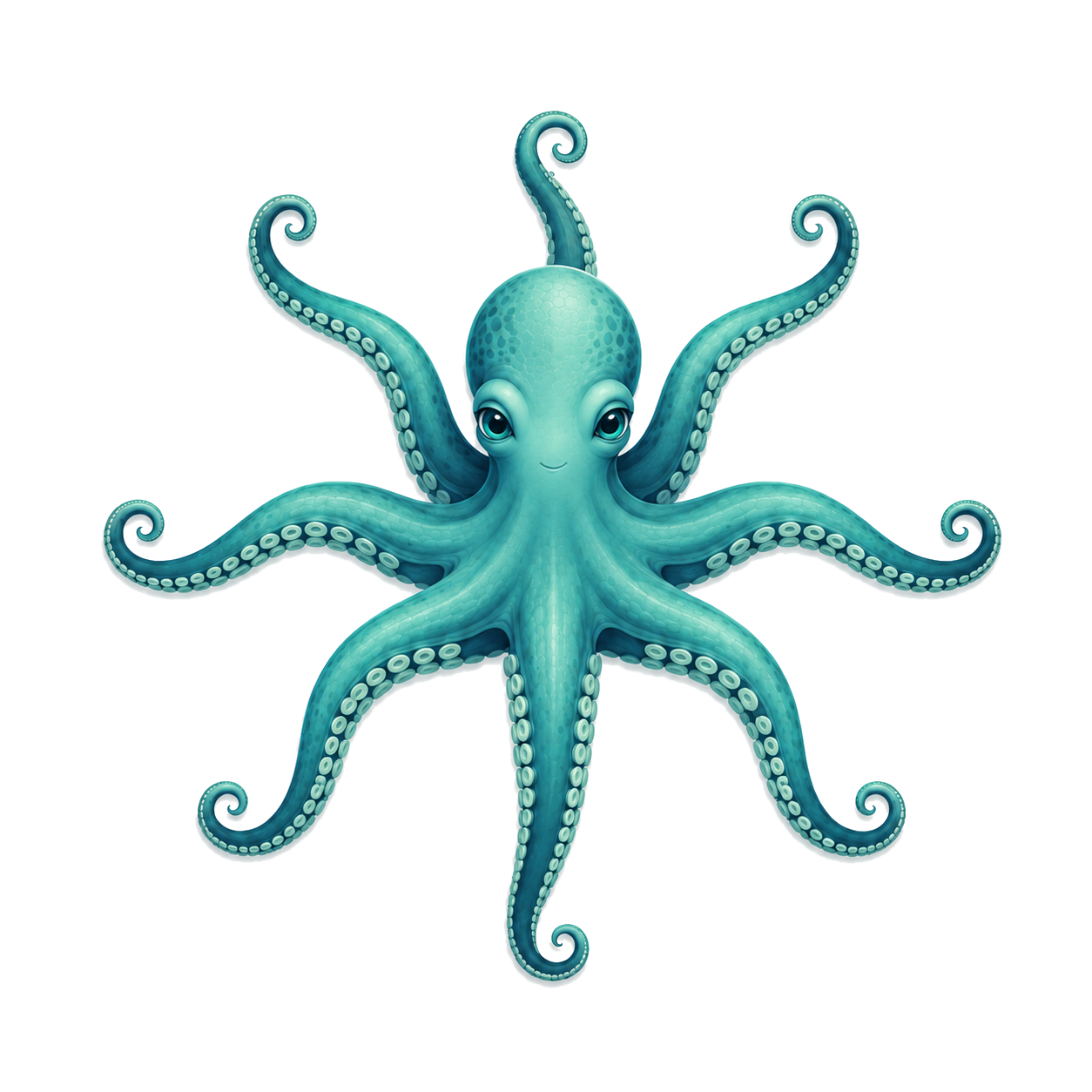
Inspired by the octopus — an intelligent, adaptive, interconnected organism — the framework connects multiple perspectives, disciplines and forms of knowledge. Each arm carries a dimension of thought, not a fixed subject area: broader by design, so the model keeps making sense as the programs evolve.

Illustration of the MARE Education octopus mascot, arms spread in a curling ring, representing the framework's eight interconnected dimensions.
Dimension 01

Awareness

Understanding environmental challenges and our relationship with nature.

What is happening around us?
Dimension 02

Science

Exploring ecosystems through observation, research and evidence.

How does nature work?
Dimension 03

Creativity

Using artistic expression and imagination to communicate ideas.

How can we imagine new possibilities?
Dimension 04

Systems thinking

Understanding connections between people, society and ecosystems.

How are things interconnected?
Dimension 05

Circularity

Exploring new relationships with resources, waste and consumption.

How can materials return into cycles?
Dimension 06

Collaboration

Learning through collective intelligence and shared participation.

How can we create together?
Dimension 07

Action

Transforming knowledge into measurable, real-world impact.

What can we change today?
Dimension 08

Regeneration

Moving beyond sustainability toward restoring ecosystems.

How can we leave a positive legacy?

The Octopus Framework is MARE Education's own pedagogical model — eight dimensions of thought, not fixed subject areas — distinct from the organisation-wide framework describing MARE Foundation's branches.

03Methodology

How a program unfolds

Every program moves learners through the same experiential arc, regardless of age or setting.

STEP 01

Explore

Learners investigate a real environmental challenge, first-hand.

STEP 02

Understand

Scientific concepts and social impacts are unpacked together.

STEP 03

Create

Participants develop ideas, artworks, prototypes and solutions.

STEP 04

Act

Projects connect what was learned with real community impact.

04Catalogue · 9 experiences

The programs

Two program families, each addressing its own anchor question — organised by age, format and where they can be delivered.

Family 01

Matter that Transforms

5 workshops

“What are we regenerating?” — the name of the program, not the partner: currently delivered with EkoSkola and partner schools, and replicable with any future partner.

MTT-01

What was it before? Sensory investigation of household materials.

5–8y · 90 min
MTT-02

Factory of transformers. Creation of an invented object from scrap; the object stays on site.

6–10y · 90 min
MTT-03

A neighbourhood that doesn't waste. Model of a circular city and systems thinking.

9–14y · 90–120 min
MTT-04

Material has memory. Narrative and re-signification of an object.

8–14y · 90 min
MTT-05

From waste to place. Transformation of a real space in the venue; longitudinal.

All ages · 4×90 min
Family 02

Memory of Waste

4 variants

“What does this piece of waste carry, and what will you carry from it?” — four variants of the same idea, adapted by age and format. The object changes; the function stays: portable memory.

MOW-01

Sensory variant. First sensory contact with waste, before the narrative.

5–8y
MOW-02

Creative variant. The memory becomes invention — creating from waste.

9–12y
MOW-03

Full narrative variant. A complete personal narrative: origin, journey, meaning.

13–15y
MOW-04

Intergenerational variant. Two generations, one conversation, two keychains.

Intergenerational
05Delivery & partners

Bring MARE Education to your community

Every experience is activated with a partner or a venue — none stands alone. Mode and location are the same layer: each partner activates or hosts a workshop from the catalogue.

EkoSkola (NGO)Active
Schools in generalActive
Żibel · beach clean-up modeOptimising
WasteServ visit modeIn progress
Nature Trust visit modeIn progress
MARE / CRDC spaceFuture

Who we work with

Schools Language schools Universities NGOs Companies Government initiatives Cultural institutions
06Impact

From awareness to transformation

MARE Education measures impact across five dimensions — from what learners know to what they change.

Five dimensions of impact
Knowledge development Creative expression Community participation Behaviour change Environmental action

Become part of the regeneration movement

Education is where transformation begins. Join MARE Education and help create a generation prepared to protect, restore and regenerate our planet.

Partner with us
MARE Foundation · Program

Today, Malta's plastic is buried
or shipped away.
It doesn't have to be.

The Malta Plastic Regeneration Program Launching 2026

We are building a way for Malta to recycle its own plastic, all of it and not only the valuable kind, and to prove that every tonne is truly recycled. Here is the problem we are working on, how our programme works, and how you can be part of it.

01Why this matters

A small island with a big plastic problem

Malta is one of the smallest countries in Europe, yet it produces a great deal of waste, and the amount keeps rising with tourism. Recycling here runs into a hard economic wall, and most plastic is never recycled on the island at all.

Why recycling struggles here

  1. Plastic has to be separated by type before it can be recycled.
  2. Sorting is expensive and earns nothing on its own.
  3. On a small island, each separated type is a small amount, too little to be worth it.
  4. Sorting also leaves a reject stream that costs money to dispose of.
  5. So most recycling simply does not pay, and it does not happen.
~16%
of Malta's plastic packaging is recycled, among the lowest rates in the EU. (approximate figure)
Rising
Waste keeps growing with tourism, widening the gap between what arrives and what can be recycled locally.

Where Malta's plastic goes today

FATE 01

Buried

Landfilled on an island where land is scarce. The material and its value are gone for good.

value lost · land consumed
FATE 02

Shipped away to recycle

Only the higher-value plastics are exported for recycling, and almost no value is added here before they leave.

value added elsewhere
FATE 03

Shipped away to burn

The rest is sent abroad to be burned, which releases carbon and pollution that better options avoid.

material destroyed
Why it matters

None of these routes keeps the material or builds recycling here. And every tonne that slips away can end up in the sea, where plastic harms the turtles and marine life along our coast. Malta needs recyclers of its own, and recycling here has to be made to pay.

02Our approach

We give recycling a reason to happen in Malta

The idea behind our work is simple. Across Europe, the companies that put plastic on the market help pay for recycling it. We are bringing that same principle to Malta and extending it to every kind of plastic, so that collecting and recycling here finally adds up. We call it the Malta Plastic Regeneration Program.

All plastics, not only the valuable ones

From bottles and containers to fishing nets and hard-to-recycle plastics, the programme is designed to make each one worth recycling here.

Only for recycling that really happens

Nothing is paid until plastic has actually been collected, sorted and recycled, and every step has been checked.

Value that stays in Malta

Anything left over after recycling is paid for stays here, to help bring more recyclers to the island.

The programme

One programme that makes every kind of plastic worth recycling in Malta.

Funded by donations, open to everyone, and built so that every tonne is verified from the beach to the finished material.

03How it works

From a donation to a tonne of recycled plastic

Money comes in as donations. It only pays out once plastic has genuinely been recycled and every step has been checked. Then the value is shared with everyone who made it happen.

Inflow

Who makes it possible

every contribution is a donation

Individuals

Residents and visitors giving small voluntary donations toward a cleaner Malta.

Companies

Businesses funding the proper recovery of the plastic they put on the market.

Philanthropy

Foundations and grants backing the harder, longer work of building recycling here.

donations
MARE Foundation

What happens to your donation

1

We fund recycling that actually happens. Nothing is paid until plastic has been collected, sorted and recycled.

2

Every tonne is verified from start to finish. Where it came from, its weight at each step, and who handled it are all checked and recorded on a secure, blockchain-based system.

3

The value is shared, not pocketed. It goes to everyone in the chain, and whatever is left helps bring more recyclers to Malta.

4

A fifth supports the wider mission. 20% of every donation goes to the Foundation's administrative costs and to MARE projects such as MARE Education; the remaining 80% flows into the programme as described above.

shared fairly

Where the value goes

To the people who did the work

Collectors, transporters, sorters and recyclers are each paid for their part in turning waste into recycled material.

To bringing recyclers to Malta

Whatever is left over is reinvested to help recycling businesses set up or grow on the island, so more plastic can be handled here.

To partner NGOs

Environmental NGOs working on the same mission, including our collection partner, share in the programme too.

Collection partner

Żibel

Żibel is a Maltese environmental NGO founded in 2017. It runs monthly coastal and underwater clean-ups, has mobilised more than 10,000 volunteers to date, and recovers lost fishing gear from the sea. In our programme, Żibel gathers the marine and beach plastic that enters the loop.

Want to become a stakeholder in this chain?

The full criteria for collectors, transporters, sorters and recyclers to join the MPRP, and the rules that apply equally to every applicant, are set out in the Stakeholder Participation Guidelines.

Read the Stakeholder Guidelines
04The engine

The Regeneration Fund

At the centre of the Malta Plastic Regeneration Program is a single fund. It pays recyclers a fair, capped fee for the plastic they process, and keeps whatever is left to bring more recycling to the island. Every payment runs through a blockchain-based, independently audited system, so the money can be followed from a donation all the way to the recycler who earned it.

Fees are capped, not open-ended

Each recycler receives a fee set in advance for the type of plastic, and capped at that level. It is enough to make recycling worth doing, and no more. No company receives an open-ended or automatic share of the fund.

The surplus stays in the fund

Anything above the capped fees remains in the fund and is reinvested to help recyclers set up or expand in Malta. Value earned by the programme stays with the programme.

Every payment is traceable

Payments are made through a blockchain-based system that is independently audited, so each euro can be followed from donation to recycler. Nothing is paid by hand or behind closed doors.

How a capped fee works

For each type of plastic, the fund tops a recycler up to a fair, market-referenced value and no further. When a recycled tonne is worth more than that, the extra does not go to the recycler; it stays in the fund for the mission.

Capped fee to the recycler
cap
surplus → the fund
what a recycler is paidreinvested in Malta

Thinking of recycling in Malta?

The fund exists to make recycling here viable and to help new operations get started, from valuable plastics like PET and HDPE to the hard-to-recycle kind. If you are a recycler considering the island, we would like to hear from you.

Talk to us about the fund
05More than recycling

A wider mission for Malta and the sea

Recycling is the heart of the programme, but not the whole of it. MARE Foundation is a non-profit set up to protect and regenerate Malta's environment, and the work reaches beyond the recycling loop.

Education & awareness

Changing how the next generation sees plastic, with hands-on learning rather than lectures.

  • Programmes in schools and language schools
  • Hands-on activities that make recycling real
  • Beach clean-up excursions along the coast
Our education program →

Protecting marine life

Plastic that escapes into the sea harms turtles and other marine life. Keeping it in the loop protects them at the source.

◆ Planned partnership with Nature Trust Malta to support turtles injured by plastic pollution.

Bringing recyclers to Malta

From PET bottles and HDPE containers to fishing nets, the programme is designed to make each kind worth recycling here, and to help fund the facilities that do it.

06Where this leads

Start with plastic. Then go further.

Once it works for plastic, the same model can cover Malta's other waste too. The island can become a working example for the Mediterranean: real recycling, proven tonne by tonne, with the value staying in the community that created it.

TODAY

Valuable plastics

Bottles and containers that already have resale value.

TODAY

Hard-to-recycle plastics

The ones nobody else will take. This is the proof of concept.

NEXT

Beyond plastic

The same model, other materials, once plastic is running.

NEXT

A model to share

A working example other places around the sea can follow.

◇ all plastics, not only the valuable ones ◇ every tonne verified ◇ value stays in Malta ◇ non-profit by design
07Get involved

Be part of the loop

The programme launches in 2026, and it grows with the people and organisations behind it. We cannot take donations on the site just yet, but you can register your interest now and we will be in touch when the programme opens.

Give

When the programme opens in 2026, even a small donation will pay for real, verified recycling. Register your interest now and we will let you know the moment you can contribute.

Register your interest

Partner

Companies can fund the recovery of the plastic they place on the market, with proof for every tonne.

Talk to us

Collaborate

Schools, NGOs and recyclers who share the mission are welcome to work with us.

Get in touch
MARE Foundation · Blog

Notes from the work,
as it happens.

Field notes, events and small proofs that regeneration works in practice. Here is what MARE Foundation has been doing lately, from the roadside to the classroom.

01Latest

Recent stories

Two moments from April 2026 — one on the road, one in the workshop — that show the same idea from two sides: waste is only waste until someone gives it somewhere to go.

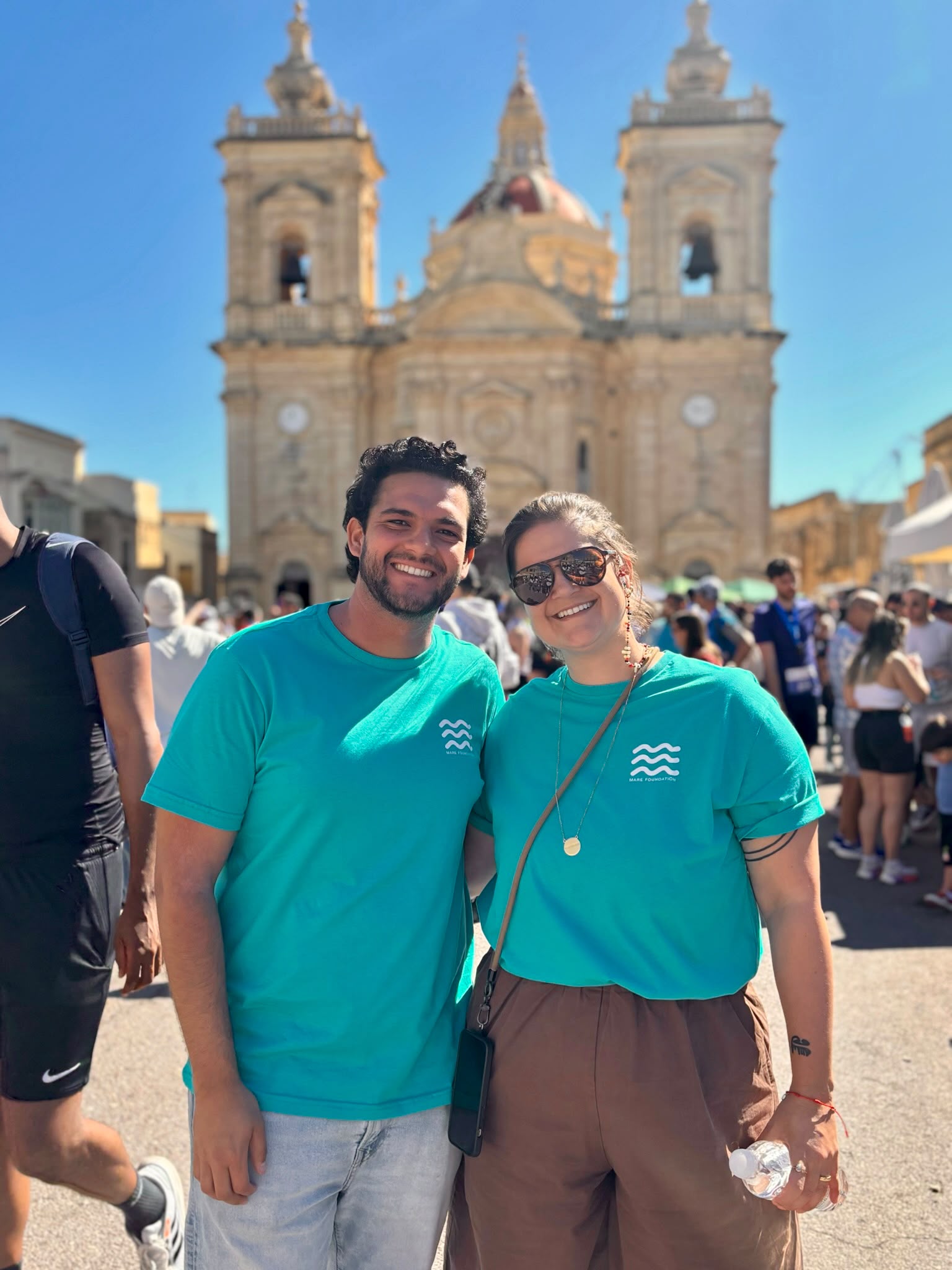
Two MARE Foundation volunteers in branded turquoise t-shirts at the RunGozo event, with a Gozitan church behind the crowd.
Regenerative event 26 April 2026

RunGozo becomes Malta's first fully plastic-recycled event

At this year's RunGozo, MARE Foundation collected all of the non-PET plastic left across the course and the event village — the cups, wrappers and packaging that usually end up buried or shipped abroad. Every piece was, and continues to be, diverted to a local recycler to be processed here on the island.

With the PET stream already recovered on its own, that closes the loop on the rest. RunGozo becomes the first event in Malta to have its plastic fully recycled — proof that a large public gathering can account for its own waste, from the start line to the finished material.

From an endpoint to a turning point — one event at a time.
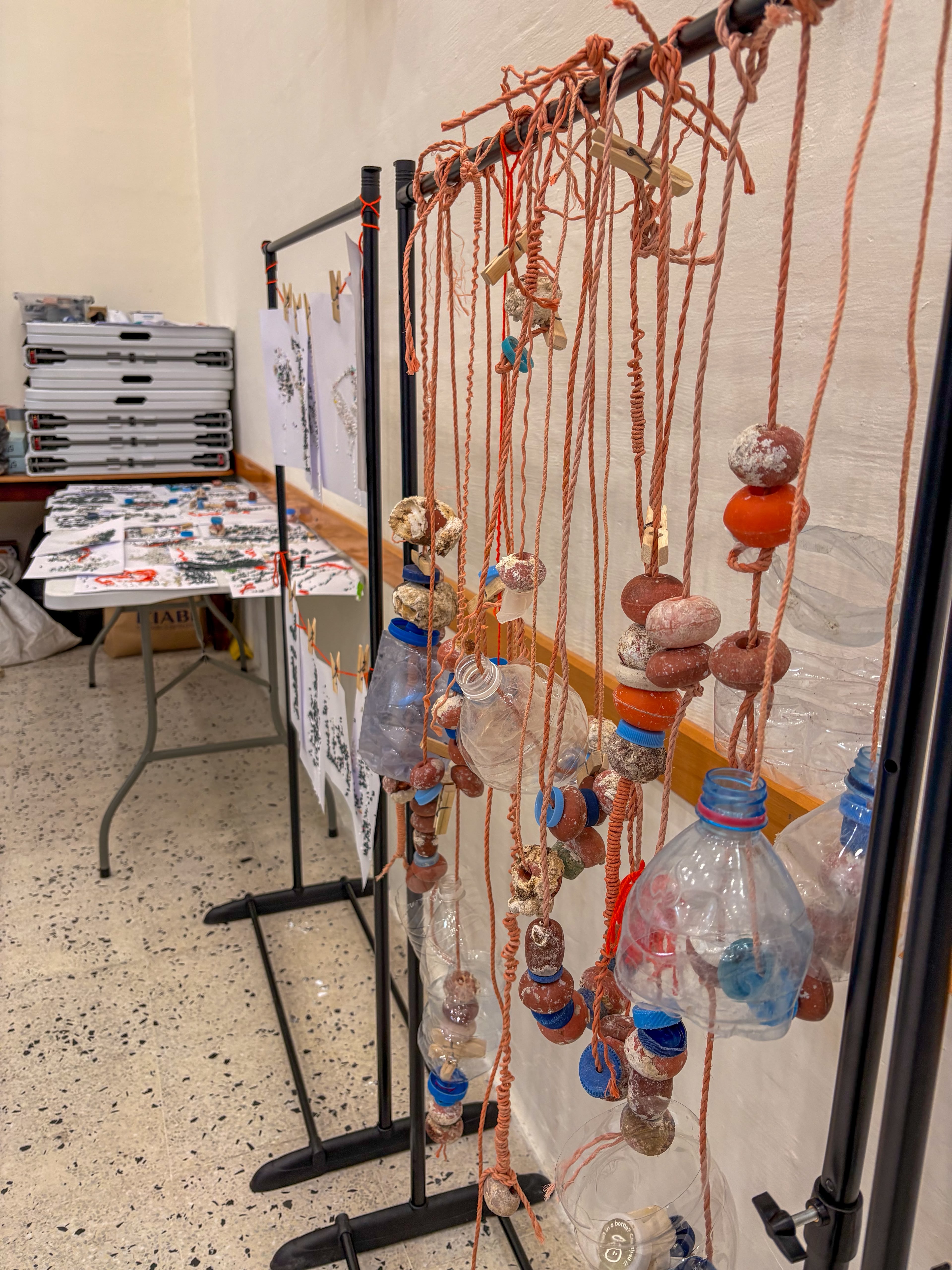
Hanging art pieces made by students from marine plastic — rope, bottle caps and recovered fragments — displayed on stands at FEE Fest, with children's drawings on a table behind.
Education 27–29 April 2026

Marine plastic becomes art with 500 students at FEE Fest

Invited by EkoSkola, MARE Foundation joined FEE Fest for three days of hands-on workshops with more than 500 students from schools across Malta. The idea we set out to prove is a simple one: plastic waste is not the end of anything. With a little creativity, it becomes material again.

Working with marine plastics recovered from Malta's own coast, the children turned bottle caps, rope and sea-worn fragments into art pieces of their own — carrying home not just an object, but a different way of seeing what we throw away.

Over 500 young makers, one shared lesson: waste is a raw material.